
Private trip
A journey tailored to your dates, your pace, and your group’s needs.
Contact Us ↗Uzbekistan
A journey through the legendary cities of the Silk Road.
From 1 990 € per person ↓See the ItineraryTashkent→Tashkent — International Airport
Tashkent
Departure for Central Asia and flight to Tashkent. This first day marks the beginning of a shared small group journey, following in the footsteps of caravans and legendary cities.
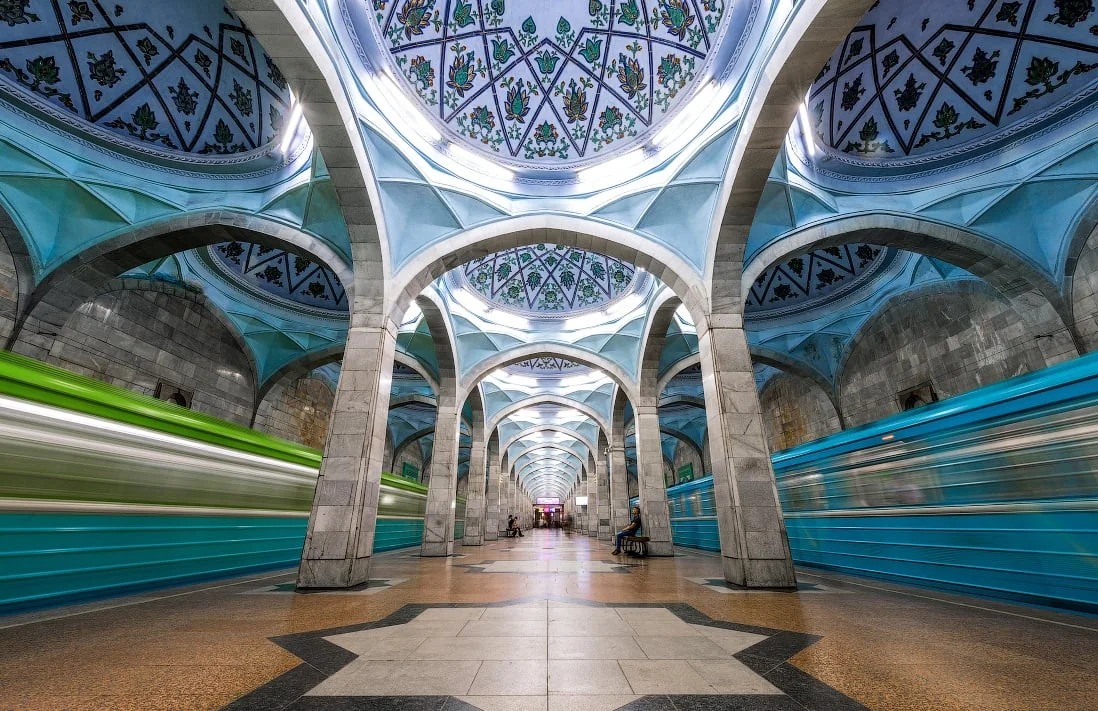
Transfer to the hotel. Check-in. Start exploring Tashkent, the capital of Uzbekistan with over 2,200 years of history. Welcoming caravans on the Silk Road, Tchach (the city’s former name) was a major commercial and cultural center of Central Asia. Under the Shaybanid dynasty in the 16th century, impressive madrassas and mosques were built, marking the city’s golden age: the Hazrat Imam Ensemble including the Barak Khan Madrassa (16th century), the Ancient Friday Mosque (still in use today), and the Kaffal Shashi Mausoleum—a pilgrimage site where a renowned philosopher, poet, and doctor of Islam from the 10th century is buried; the magnificent and atmospheric Chorsu Grand Bazaar; the Tashkent Metro, Central Asia’s first metro, famous for its stations, each uniquely decorated by leading national artists to a specific theme such as cotton or the Uzbek poet Alisher Navoi. Panoramic city tour: Amir Temur Square, Independence Square, Theater Square (external visit). Overnight at the hotel.

Urgench — Khiva
First steps in Khiva
Breakfast at the hotel. Transfer to the airport for the local Tashkent / Urgench flight. Arrival in Urgench and transfer to Khiva. Arrival in Khiva. Begin your visits in Khiva: the West Gate Ata Darvaza of the old city, the Muhammad Amin Khan Ensemble (19th century) with the Khan’s Madrassa and the legendary unfinished Kalta Minor Minaret, Kunya Ark—the 17th-century citadel and former official residence of Khiva’s Khans with the Reception Hall and Royal Mosques, the Muhammad Rahim Khan II Madrassa; the Tash Khauli Palace or 'Stone Palace', secondary residence of the Khans of Khiva with the Harem, Reception Hall, and Court of Justice; the Djouma Friday Mosque from the 10th century, one of Khiva’s treasures with a veritable forest of 213 carved wooden columns, and the old Caravanserai now converted into a bazaar. Overnight at the hotel.
Khiva — Itchan Kala
Visits to the city’s must-see historic sites.
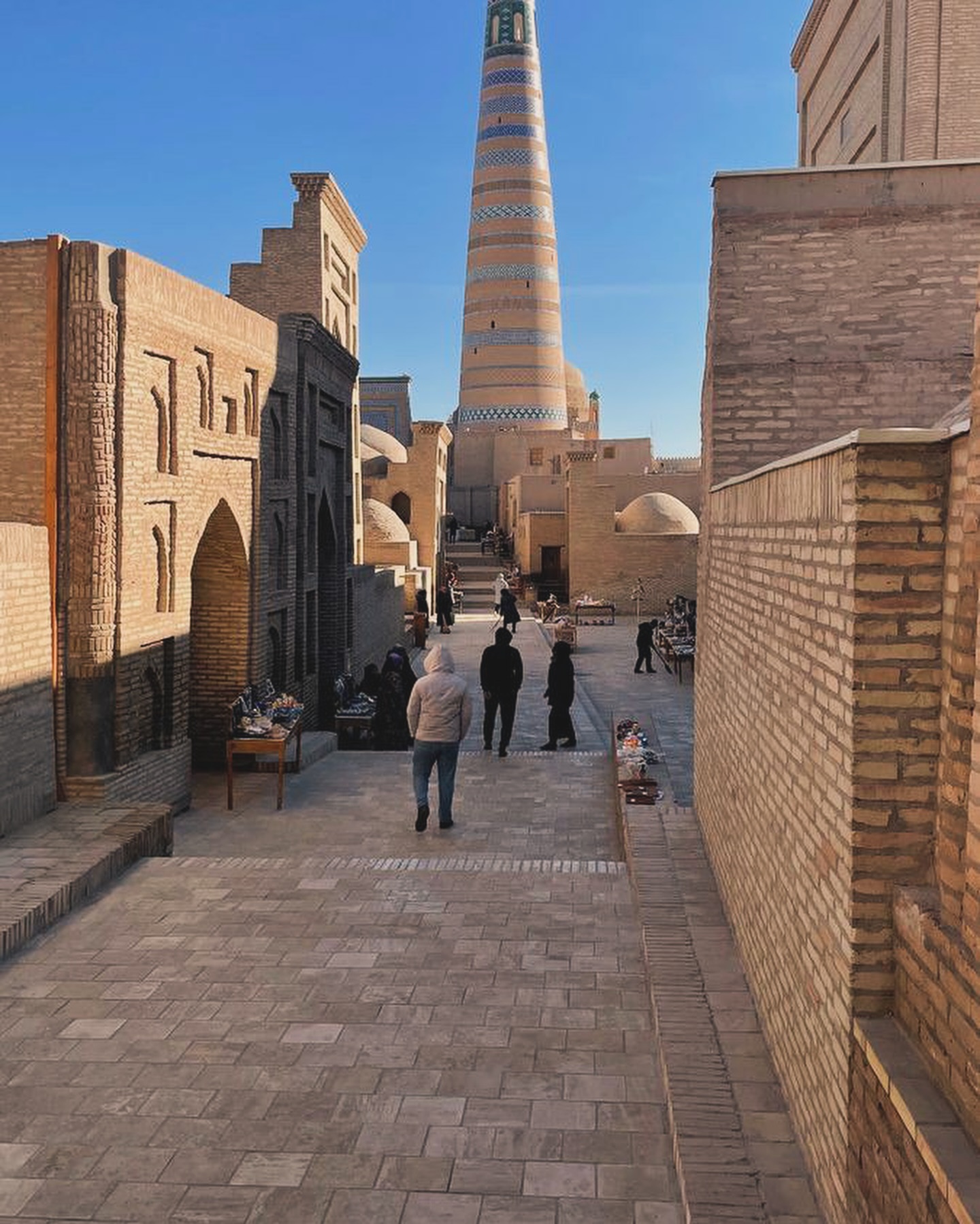
Breakfast at the hotel. Continue exploring Khiva: the Sacred Mausoleum of Pahlavan Mahmoud, topped with a large turquoise dome and housing the tomb of the city’s patron saint—a great Sufi master, poet, and beloved wrestler; and the Islam Khodja Complex, featuring the Islam Khodja Minaret and Madrasa.
Free time after the visit.
Overnight at the hotel.
Toprak Kala — Ayaz Kala — Bukhara
Khiva – Desert Fortresses Toprak-Kala – Ayaz-Kala – Urgench – Bukhara
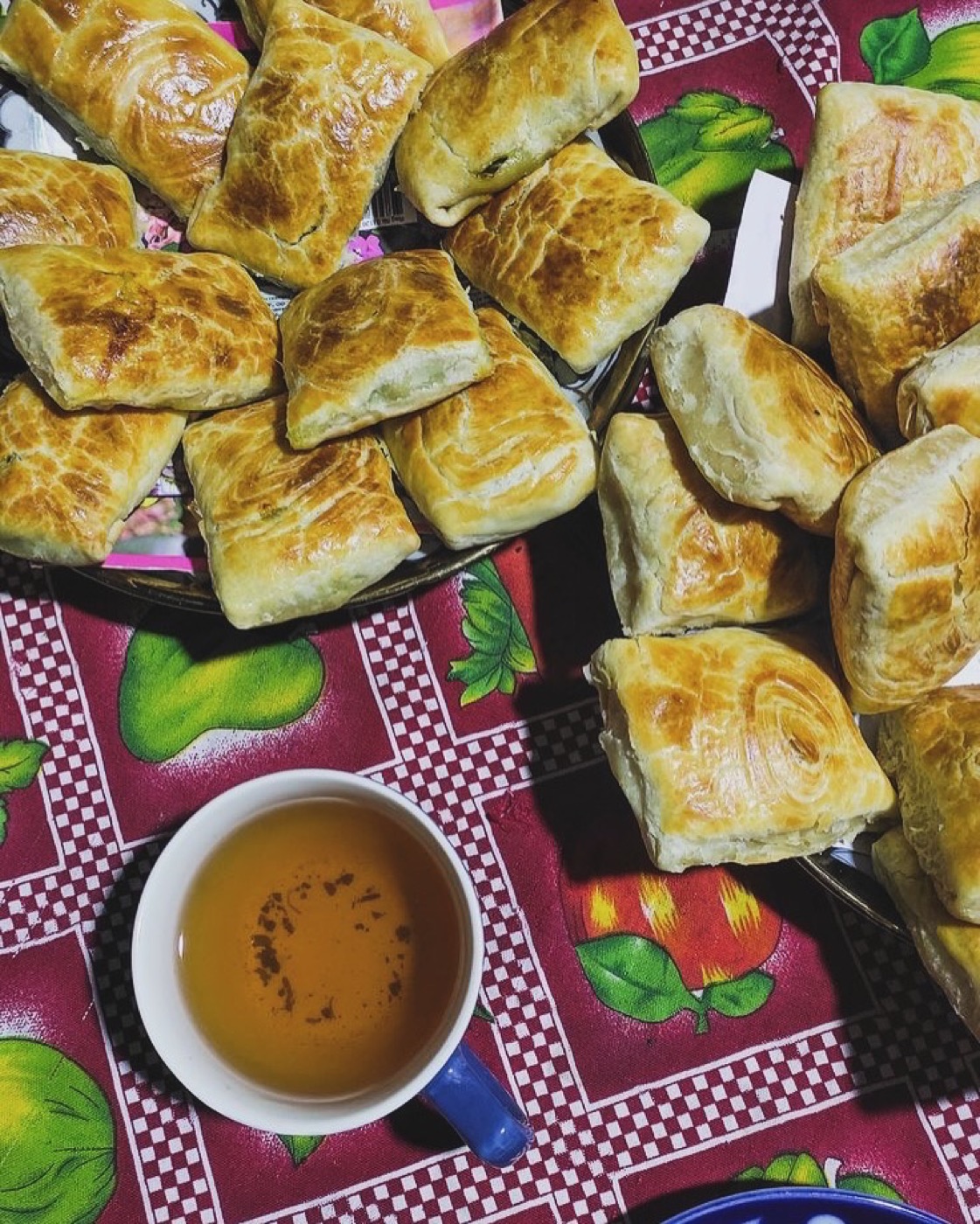
Breakfast at the hotel. Departure for the Kyzylkum Desert, known as the 'Red Sand', one of Central Asia’s largest deserts, stretching 300,000 km² across Uzbekistan and Kazakhstan. Arrive at Ellikkala, the former bed of the Oxus: once a prosperous region dotted with fortified cities, later abandoned when the river changed its course. Explore remnants of the ancient Oxus civilization. Continue visiting, including two ancient fortresses: Toprak-Kala (1st century BC) and Ayaz-Kala (3rd century BC). Lunch under a yurt near Ayaz-Kala fortress. Transfer to Urgench train station and departure for Bukhara by train. For about a hundred kilometers, we cross the villages of the Khorezm region, then traverse the Kyzylkum Desert (Red Sand). The unique beauty of the Central Asian desert transports us to the time of the caravanners who crossed this sea of sand on camelback. Arrival in Bukhara and overnight at the hotel.
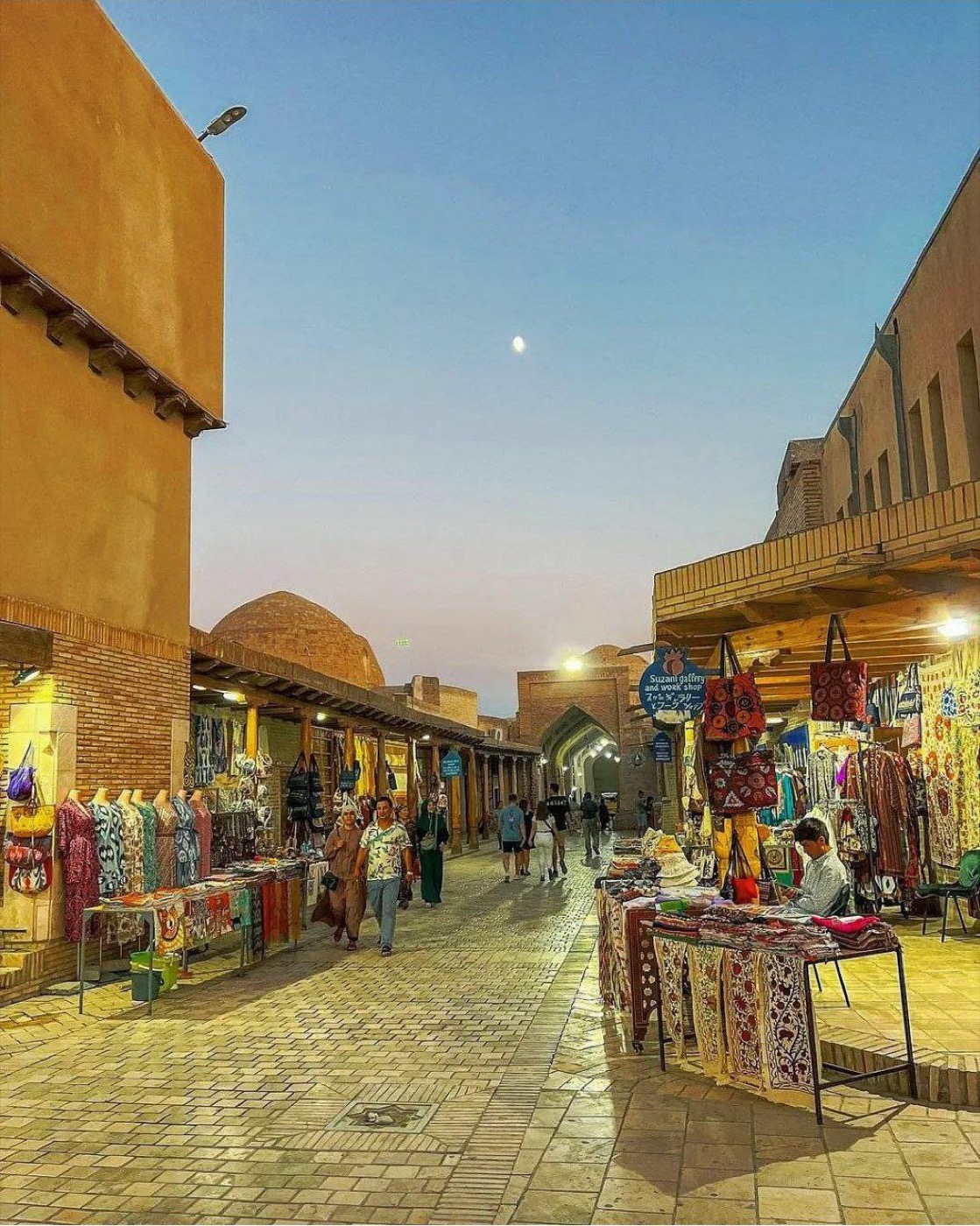
Bukhara — old town
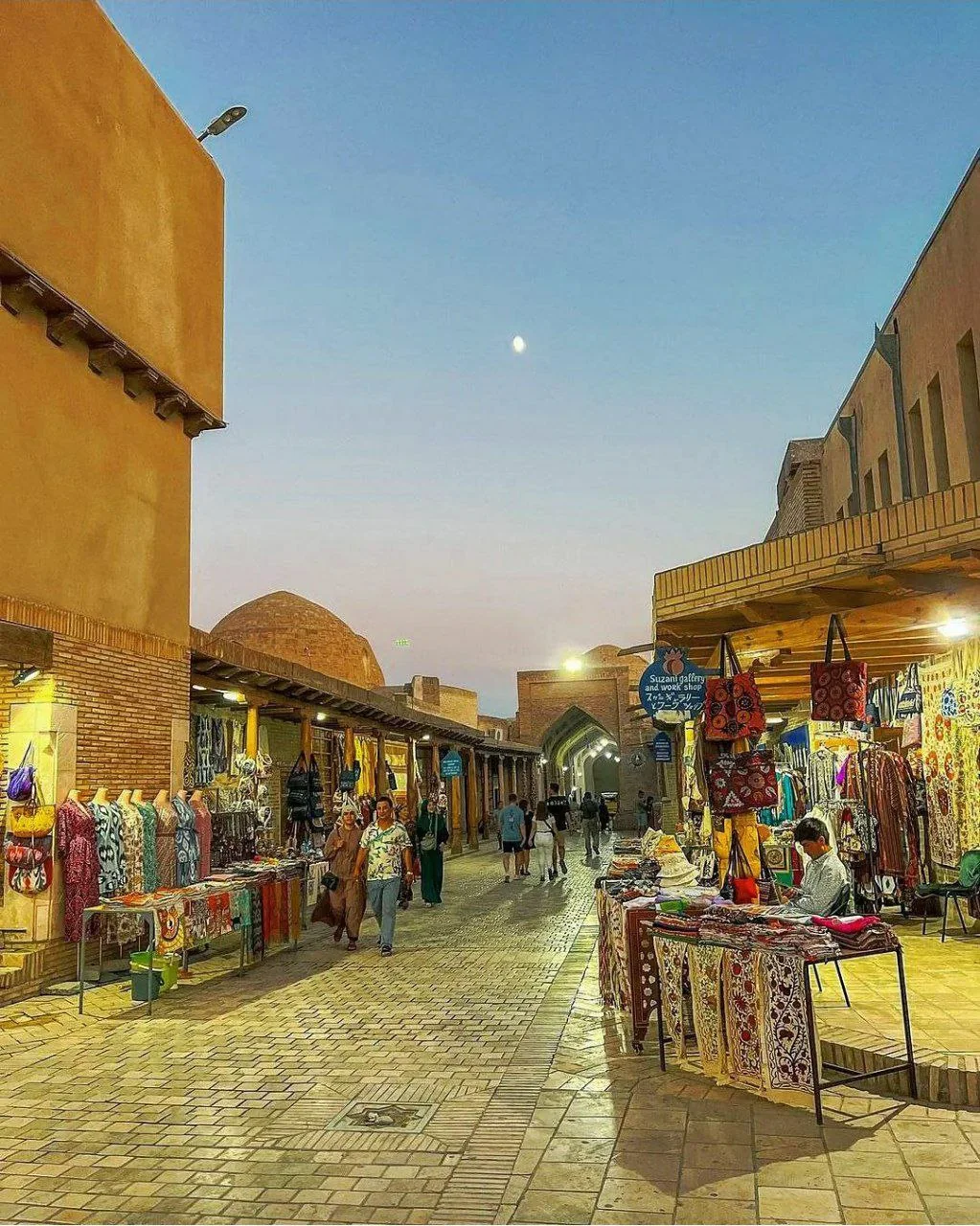
From the Samanid Mausoleum to the Ark Citadel, from the Poi Kalon complex to the domed bazaars, the day explores the heart of Bukhara on foot all the way to the Liabi Khauz pool.
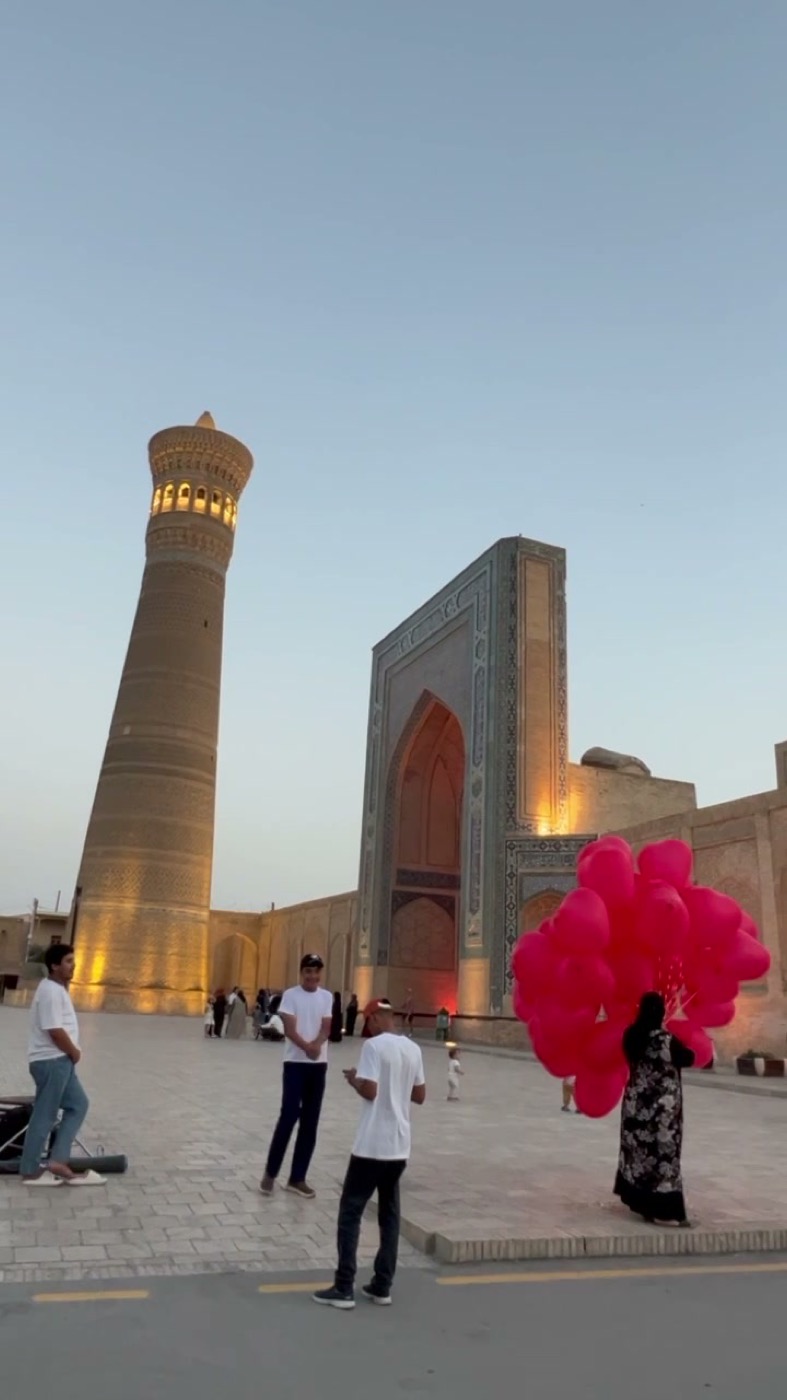
Breakfast at the hotel. The day is devoted to visiting the spectacular Samanid Mausoleum, the oldest and most precious in the country, a genuine masterpiece of medieval architecture; Chashma Ayub Mausoleum (“Job’s Spring”), built over the tomb of the prophet Job; the Grand Bazaar; Bolo Hauz Mosque (“mosque over the pond”) built in 1712; the Ark, the ancient citadel and former official residence of Bukhara’s rulers; the Poi Kalyan Complex, central in the old city, dominated by the imposing Kalyan Minaret (12th century), with the Kalyan Friday Mosque, the largest in Bukhara, accommodating up to ten thousand worshippers, and the Mir-i-Arab Madrassa; the Trading Domes, fine examples of 16th-century civic architecture: the Taki Zargaron Dome for jewelers, Taki Telpakfurushon—the hat makers’ dome, and Taki Sarrafon, reserved for Bukharan Jewish moneychangers; the Abdullakhan Tim, an old 16th-century trading gallery, and the ancient caravanserais of the old town; the Ulugbek Madrassa and the Abdulazizkhan Madrassa; the Lyab-i Hauz complex ('by the pond'), Bukhara residents’ favorite square, with a large pool lined with old mulberry trees and surrounded by historic landmarks. Overnight at the hotel.
Bukhara surroundings — Bakhaoudin Naqshband
Just outside the city: the Chor Bakr necropolis, the Sufi sanctuary of Bakhaoudin Naqshband, and the summer palace of the last emir, followed by a visit to a silk paper workshop and a meeting with a master miniaturist.
Breakfast at the hotel. Depart for the outskirts of Bukhara. Visit the Chor Bakr complex with its mosque and madrasa, followed by the Bakhaoudin Naqshband complex, which is considered the holiest site in Bukhara—the second Mecca of the Muslim world. The great Sufi Bakhaoudin Naqshband, founder of a major dervish order and revered as a saint, is buried here; the Sitara-i Mokhi Khossa Palace was the summer residence of Bukhara’s last emir. This extensive complex was built at the end of the 19th century. You can admire the city's finest example of mirror stucco decoration, crafted by a master artist. Visit the silk paper workshop and meet Professor Davron Tachev. Return to Bukhara and free time. Overnight at the hotel.

Bukhara
A full day with no set itinerary to wander the old town, its alleyways, workshops, and teahouses at your own pace.
Nourata — Lake Aydarkul — Asraf
The route crosses the Kyzyl-Kum desert to Nourata and its sacred fish, skirts Lake Aydarkul, then ascends to Asraf, a mountain village surrounded by orchards where you’ll stay with a local family.
Breakfast at the hotel. Depart for Nourata, crossing the vast Kyzyl-Kum desert, which means “red sand.” This is a vast area of small sandy dunes covered in scrub, home to abundant and varied wildlife: goats, jackals, wolves, monitor lizards, and numerous insects. Arrival in Nourata and discovery of the town: the sacred fish pool, the mosque, and the remains of the Sogdian citadel. Lunch with a local family. Then continue to Lake Aydarkul. Lake Aydarkul, meaning “salty lake,” was created accidentally following the overflow of a Kazakh reservoir in the 1970s. Enjoy a short walk along the lake—swimming is possible depending on the season. Continue on to the mountain village of Asraf, a beautiful Tajik-Uzbek village beside a river and surrounded by lush orchards. Arrival in Asraf and settle with your host family. Take a short stroll around the village. In the evening, help prepare the evening meal. Dinner and overnight with the local family.

Asraf — Nurata Mountains
A gentle walk around the village opens up sweeping views of the mountains and brings encounters with locals carrying wood and fodder on donkey-back.
Breakfast. Light walk and hike through the village surrounds. The mountains offer exceptional panoramas yet remain easily accessible. You'll walk along stony paths and meet many local residents transporting fodder and wood by donkey. Return to your host family’s home and lunch. Dinner and overnight with the hosts.
Asraf — Samarkand
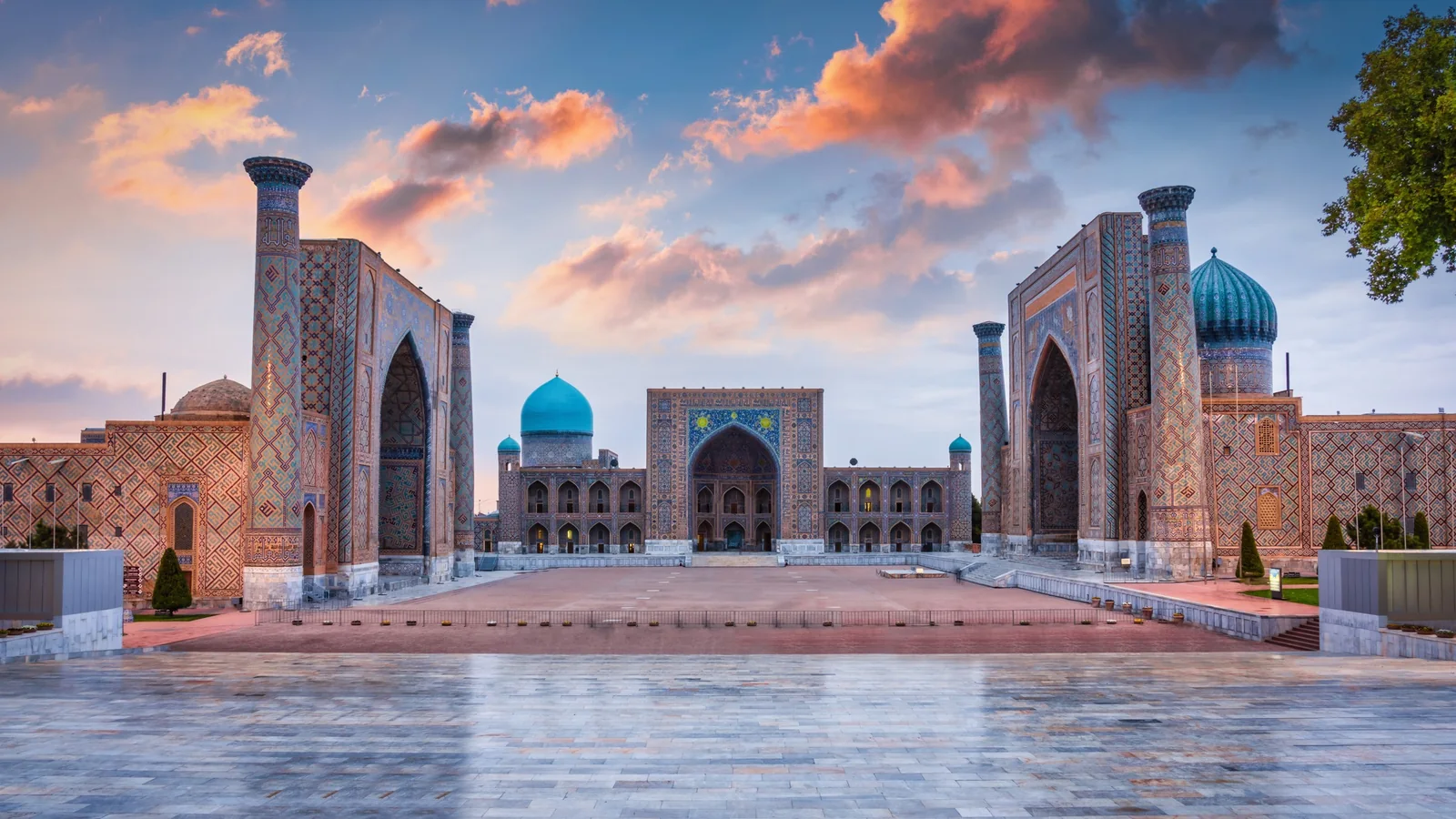
Arrival in Samarkand around noon. The first visits lead to the Registan, renowned for its three madrasas, followed by the Gur-e-Amir mausoleum, where Tamerlane rests.
Breakfast with your host family. Depart for Samarkand. Arrival around midday and check-in at the hotel. First visits: The Registan (“sandy place”)—the jewel and heart of Samarkand, the most beautiful square in Central Asia, framed by three majestic madrasas. The Ulugh Beg Madrasa, built in the 15th century by Ulugh Beg—the grandson of Tamerlane and a renowned astronomer and mathematician—was the largest astronomical school of its era; the Sherdor Madrasa, erected in the 17th century by city governor Yalangtush Bahadur, is famous for its grand gateway lavishly adorned with mosaics—a true masterpiece of architecture from its period; seeking to complete the square’s harmony, this governor also built the third madrasa, Tilla Kari (“decorated with gold”). The Gur-e-Amir mausoleum (“sovereign’s tomb”) is topped with a striking blue dome. Built by Timur for his favorite grandson, heir to the throne, who died in 1403 during Timur’s Asia Minor campaign. Later, Tamerlane himself was buried here, at the feet of his spiritual master Sayyid Baraka. Ulugh Beg also rests here, at the foot of his grandfather. Free time. Overnight at the hotel.

Samarkand
A free day to revisit monuments, wander the markets, or simply enjoy the city at your own pace.
Samarkand — Tersak — Samarkand
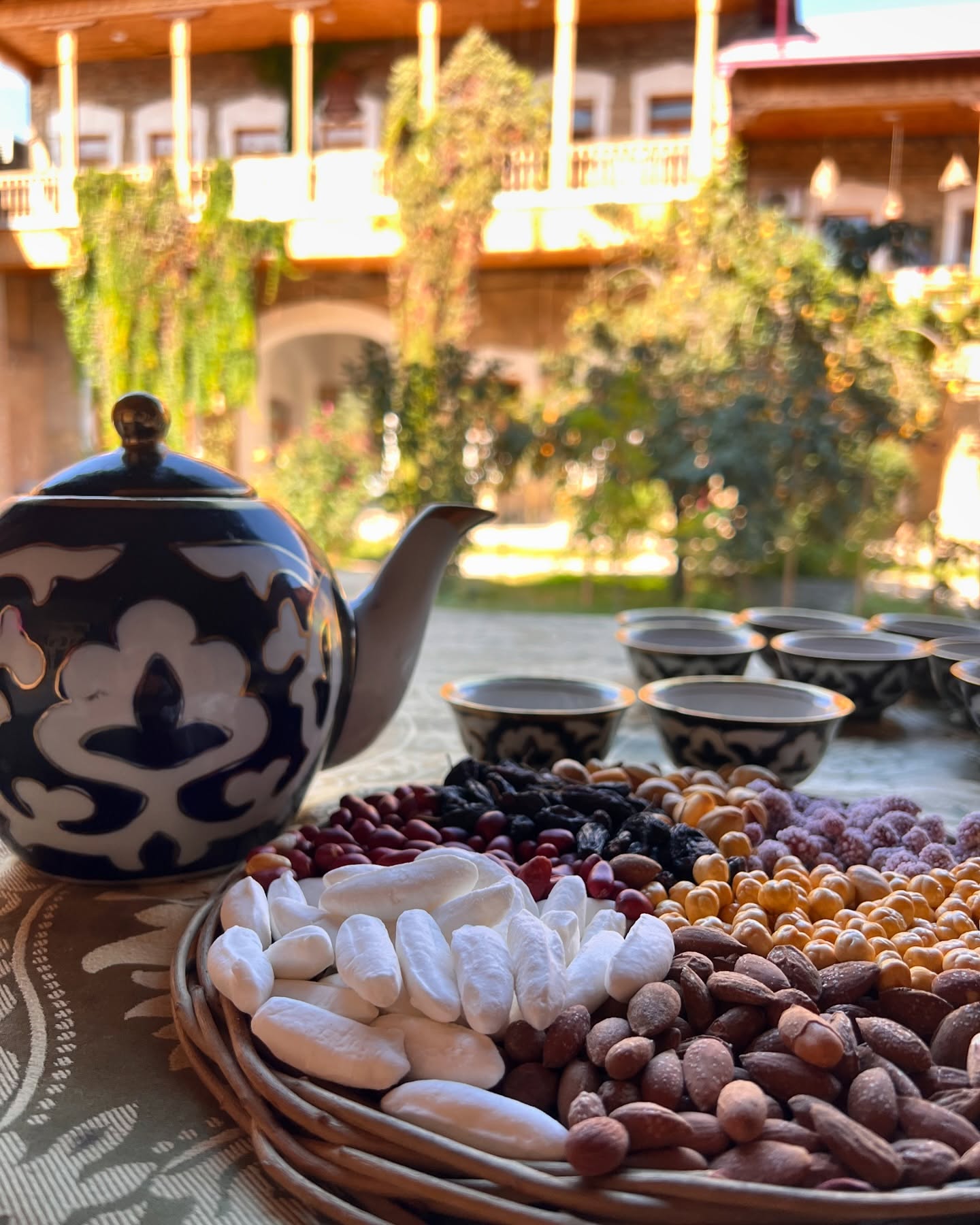
In a village near Samarkand, a retired French teacher—founder of the local school and former mayor—hosts you for tea and then lunch in his home.
Breakfast at the hotel. Departure for a typical village near Samarkand. Upon arrival, meet a retired French teacher over traditional tea. Walk to discover the village, followed by a convivial lunch at the teacher’s home. A remarkable local figure, he founded the village school and served as mayor; now retired, he’s delighted to share his story. Return to Samarkand in the afternoon. Free time to relax or explore at your leisure. Overnight at the hotel.

Samarkand — Tashkent
Final visits in Samarkand: Ulugh Beg’s observatory, the Mausoleum of Saint Daniel, the Shakhi Zinda necropolis, and the Bibi Khanum Mosque, before the train to Tashkent.
Breakfast at the hotel. Sightseeing in Samarkand: The Ulugh Beg Observatory and its great sextant – one of the city's most important historical monuments, built in the 15th century by the famous Ulugh Beg. Its museum is dedicated to the lives of the great scholars of the Timurid era and the most renowned astronomers; The Mausoleum of Saint Daniel from the 15th century; The Shah-i-Zinda necropolis, the 'Living Kings' abode', undoubtedly one of the most beautiful architectural ensembles in the city, composed of 20 monuments that showcase the exceptional mastery of Eastern architects and artists; The Bibi Khanum Mosque, once the largest mosque in Central Asia, accommodating twelve thousand worshippers, built by Tamerlane in honor of his favorite wife, Bibi Khanum; The vibrant and exceptionally colorful market next to the mosque. Transfer to Samarkand railway station and departure for Tashkent by train. Arrival in Tashkent and check-in at the hotel. Overnight at the hotel.
Tashkent — International Airport
Breakfast at the hotel, then transfer to Tashkent airport for your return flight.
A Thousand and One Nights takes you, in a small group, through Uzbekistan’s very best: Khiva, Bukhara and Samarkand, the desert fortresses, and a mountain village where you’ll spend two days staying with locals.
Domes, madrasas, covered markets, and ramparts immerse you in the era of the great caravans. This journey adds the ancient castles of the Kizil Kum desert, Nurata and Lake Aydarkul, the daily life of Asraf village, and a lunch with a former French teacher near Samarkand.
You will visit
This is a small-group tour of 4 to 8 participants with a French-speaking guide and driver. Several nights in Khiva, Bukhara, and Samarkand, including free days, allow plenty of time to savor each city.
Don’t miss
Travelers seeking to discover Uzbekistan in a small guided group, combining the great Silk Road cities and authentic village life.
Full cultural program, long road and train journeys, and walking tours on cobblestones. Two nights with locals with simple comforts, sharing a room with 3 to 4 people.
Tour designed for a group of 4 to 8 people.
Bring comfortable shoes and clothing suitable for a continental spring.
In Asraf, accommodation is with local hosts, 3 or 4 people per room.
Three days with free time in Khiva, Bukhara and Samarkand.
Included in the quote
Not included
Upcoming departures